
A complete performance forecast weighs up inventory, historical growth, seasonal outlook, genetics, management, and market timing all at once, and most of that still comes down to judgement and experience, as it should. But one piece of it, whether this year's heifers will carry enough weight in time, can be turned into a hard number instead of a guess.
Every year the same question gets asked on its own: will this year’s heifers be heavy enough for joining, so calving lines up with the best window, when green feed drives calf growth and feeds lactating cows? But the answer isn’t just about the heifers. It’s your incoming replacement count, and it’s already driving two other decisions, whether anyone’s connected the dots or not.
Three decisions, one number
How many older breeders can you afford to cull this cycle? That's capped by how many are coming in behind them. Cull harder than your replacement number supports and you're shrinking the herd without meaning to.
How many females do you need to buy or sell to hit your target stocking rate? Same number. A shortfall in replacements might mean buying in, or easing off a destocking plan you'd otherwise run. A surplus might support destocking harder than planned.
How many bulls do you need at your usual ratio? Same number again. The bull battery you need is sized to how many females are actually going to be exposed and cycling, not to a headcount you assumed at the start of the year.
Get the replacement number wrong, and all three follow it down.
How the forecast works
The weight prediction dashboard in KoolSoftware takes the current weight spread of this calf drop’s heifers and projects it forward against a growth rate you choose - either the herd’s own recently tracked average, or a rate you set yourself. Set the target weight (270kg is a common joining benchmark, adjust to your own) and how many days out you’re looking, and it splits the mob into three: below target, in target, and above target.
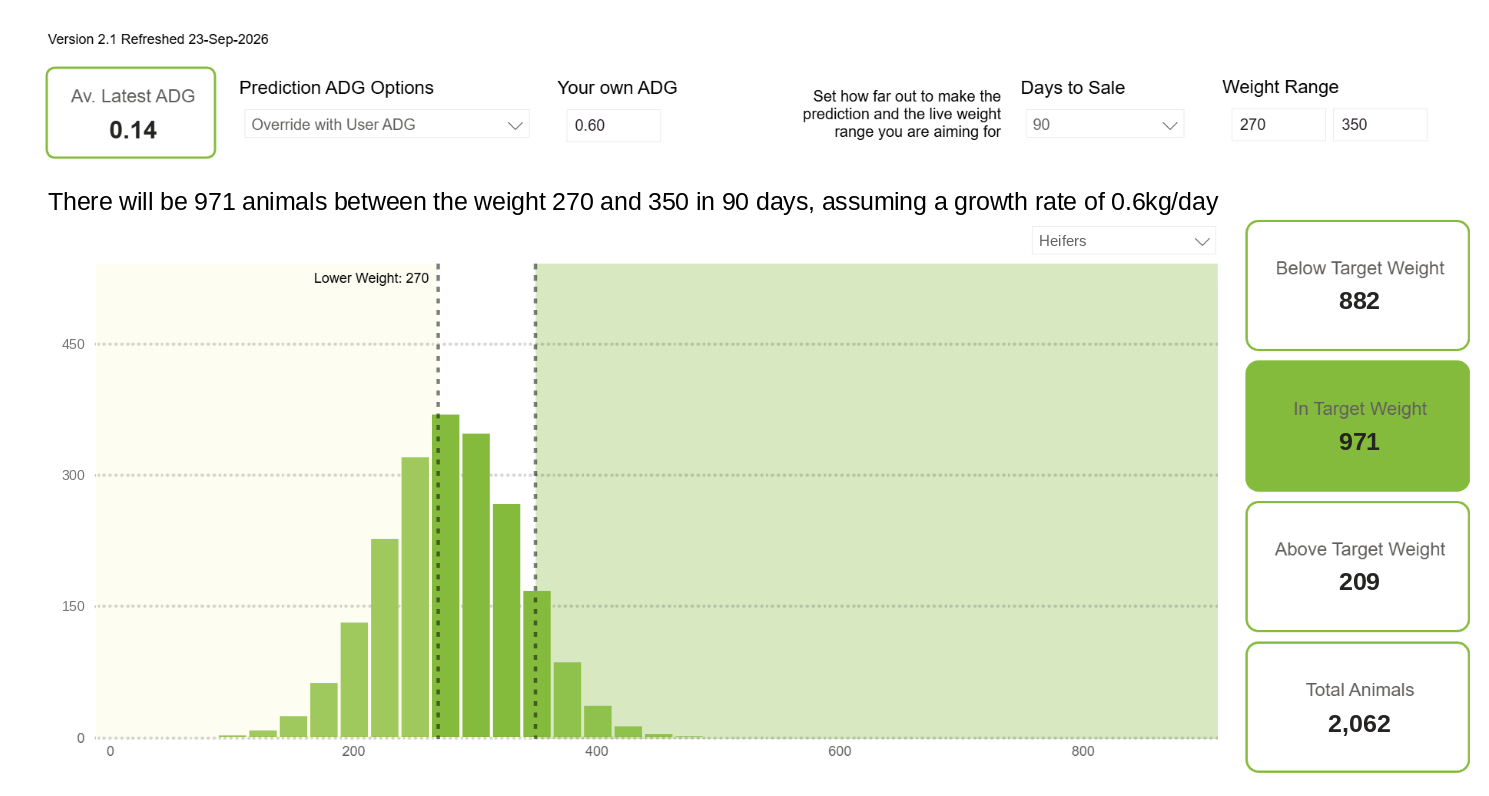
Run it on 2,062 heifers, aiming for 270 to 350kg in 90 days, with a growth rate of 0.60kg a day entered as the assumption: 971 land in that band, the replacements coming through on schedule. 882 sit below it, the ones that won’t make it this cycle without help. 209 are already above it.
As with any forecast, 0.60kg a day is an assumption you set, not a guarantee. Run it at a rate that matches the season you’re actually having, not the one you hoped for.
Acting on it in time
Whether your operation holds heifers separate until they're ready to join, or runs them with the mob from early on, the same forecast tells you what you need to know: which of this year's heifers are on track, and which need a hand, whether that's extra feed or an earlier move into the mob, to get there before the window closes.
See it for yourself
Book a demo and watch the weight prediction dashboard run the same forecast for a heifer cohort. Set the target weight, set the growth rate or use the tracked average, and see how the replacement number moves.